

AI Agent use cases in 2026: 7 scenarios and 2 Taiwan cases | Alta.DI
How to start AI data analysis in 2026? A decision framework for three tool categories explains how LLMs, AI Agents and composite AI differ, and how to move from BI that shows data to Agents that act. Book a free assessment.


An AI Agent is enterprise software that understands a goal, breaks the work down, calls tools and carries out multi-step work within authorized limits. Companies now evaluate whether an Agent can run reliably within permissions, cost and acceptance criteria, rather than whether it can produce a demo.
On a Monday morning, a manager puts presentations from several AI Agent vendors on the table and asks: "Can we get one built next month?" The hard part is deciding which process to start with, which data to use, and how to show that the PoC is worth continuing.
Gartner's 2026 data shows that 17% of surveyed organizations have deployed AI Agents and more than 60% expect to do so within two years. [1] Another forecast says 40% of enterprise applications will embed task-specific AI Agents by the end of 2026 (market forecast). [2] Gartner also predicts that more than 40% of agentic AI projects will be canceled by the end of 2027, citing rising costs, unclear business value and inadequate risk controls. [3]
This article reviews how AI Agents are used in seven departments and industries, and uses two named Taiwan cases to show which results have actually happened and which are still targets the company has set.
What is an AI Agent? From fixed-process tools to controlled multi-step execution
Traditional RPA or rule-based automation runs on conditions written in advance. An AI Agent receives a goal, decides which steps are needed, and then calls knowledge bases, forms, spreadsheets or other systems within its authorization. When data is insufficient, permissions do not match or an action is high-risk, the company still needs to set stop conditions and human approval.
"Autonomous" does not mean uncontrolled. Companies need an Agent to handle variation within defined data, tools and rules, and to leave an execution record that can be checked.
In its 2026 content on AI Agent trends, Google Cloud also centers the enterprise focus on measurable business results, governance and employee collaboration, rather than simply adding more Agents. [6]
AltaBots.ai is an enterprise AI Agent platform. It lets companies orchestrate multi-step workflows with No Code, and consultants work alongside you to review needs, data and acceptance criteria. AltaBots.ai can infer user intent from conversation content, but it does not provide algorithmic sales or churn prediction. That kind of prediction requires a separate data analytics product and suitable model training.
How can you tell traditional automation from an AI Agent?
When evaluating options, you can ask vendors to demonstrate three things directly: how they ask follow-up questions when an instruction is incomplete, how they stop when an action is not authorized, and how execution results are recorded. A tool that only follows a fixed set of conditions to the end is still rule-based automation. Planning multiple steps within boundaries is what fits the purpose of adopting an AI Agent in an enterprise.
After surveying thousands of vendors that call themselves agentic AI vendors in 2025, Gartner estimated that about 130 companies have the relevant capabilities, and warned companies to watch for "agent washing", the relabeling of existing assistants or chatbots. [3] If you are comparing vendors, use5 risks to know before adopting an AI Agentto check data permissions, error handling and responsibility boundaries.
2026 AI Agent trends: adoption speeds up, and acceptance and governance move earlier
McKinsey's 2026 survey shows that among companies with annual revenue above US$1 billion, 40% are scaling up their use of AI Agents, compared with 22% of smaller companies. [4] This gap should not be read as the average adoption rate for all companies, but it shows that company size, data conditions and governance capability affect how fast adoption moves.
Surveys also support the resistance. Another McKinsey survey covering about 500 organizations found that nearly two thirds of respondents named security and risk as the main barrier to scaling agentic AI fully. [5] So companies should not accept a project only on whether it was built. They should also check data sources, tool permissions, conditions for human takeover, error records and the cost of a single run.
If an article or presentation claims an Agent can be deployed within a few weeks, ask about the assumptions: whether the data is organized, whether systems have usable interfaces, and whether the process owner can provide acceptance samples. Without these conditions, the timeline is not comparable.
AI Agent use cases: how do four departments use them?
Department cases help you find a starting process where the work is repetitive, the data is available and the results can be checked. They cannot prove that every company will get the same results.
Human resources: organizing resumes against job requirements
HR can have an Agent organize resumes against confirmed job requirements, flag missing data and produce a pre-interview summary. People still decide the scoring rules, check for bias, and keep the final interview and hiring judgment.
Good metrics to validate first include the time to process each resume, the share of fields that need manual rewriting, and whether the same criteria are applied across different roles. These are easier to verify than a direct promise of a higher hiring rate.
Digital marketing: cross-brand reports and insight summaries
In digital marketing, the bottleneck is often data preparation. Agencies need to export data from several platforms, clean formats, match campaigns, and then write the results into reports that clients can understand.
After IMAG, a Taiwan integrated marketing company, used an AI Agent to handle reports, each brand report went from three days to one minute, and a three-person team can support more than 50 brands. [7] This is an actual result from a named case, not a guaranteed value that every company will get. If your work is also stuck on cross-platform reports, start with the data and acceptance criteria listed inGuide to AI report automation for advertising agencies.
Internal knowledge and meeting management: turning discussion into trackable work
Enterprise knowledge management also covers follow-up after meetings. EcLife uses an AI meeting assistant to organize meeting content in real time, so discussions, decisions and follow-up tasks have a consistent record. [8] The value of this kind of process is fewer manual omissions and less time spent organizing after meetings, but you still need to decide who confirms decisions and who can edit the record.
To extend this to regulation or technical document lookup, companies can use RAG (retrieval-augmented generation), so the Agent first finds content in approved data sources and then generates an answer. Citing sources and "stop when no answer is found" should both be part of acceptance.
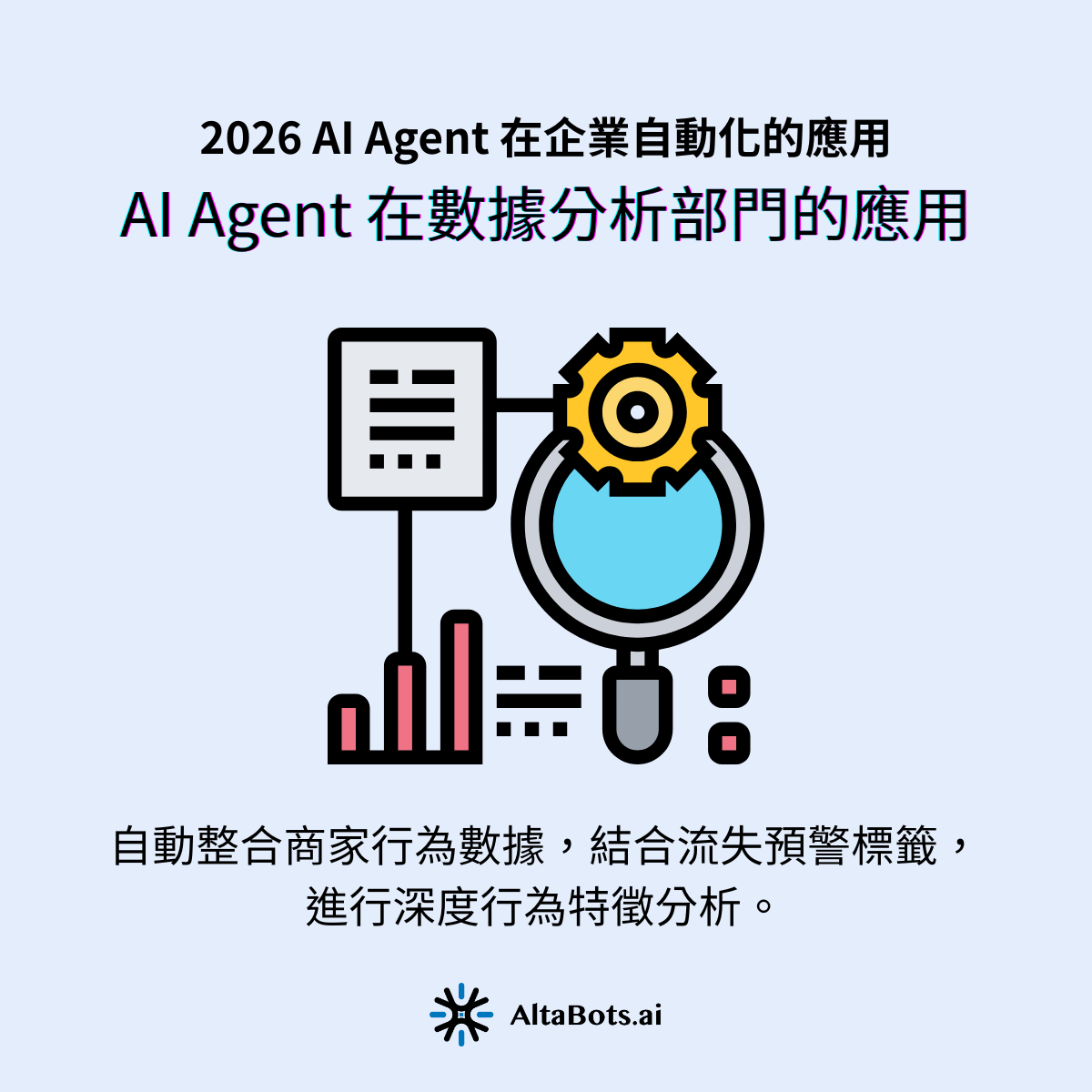
Data analysis: start with traceable organization and interpretation
An AI Agent can call spreadsheets or analysis tools to run fixed data cleaning, field checks, chart generation and report drafts. If the task involves sales prediction, churn prediction or purchase probability, you need to confirm data quality, modeling method and product scope separately. Intent inference in conversation should not be treated as algorithmic prediction.
IMAG's reporting case offers a workable starting point: first hand the Agent an analysis process that already has rules and can be checked by people, and then evaluate whether to extend to more complex judgments. [7]
Cross-industry use: finance, logistics and training
The name of an industry should not be the basis for choosing a case. Companies should still go back to data sensitivity, the cost of errors and the human takeover mechanism to decide whether the same Agent way of working applies.
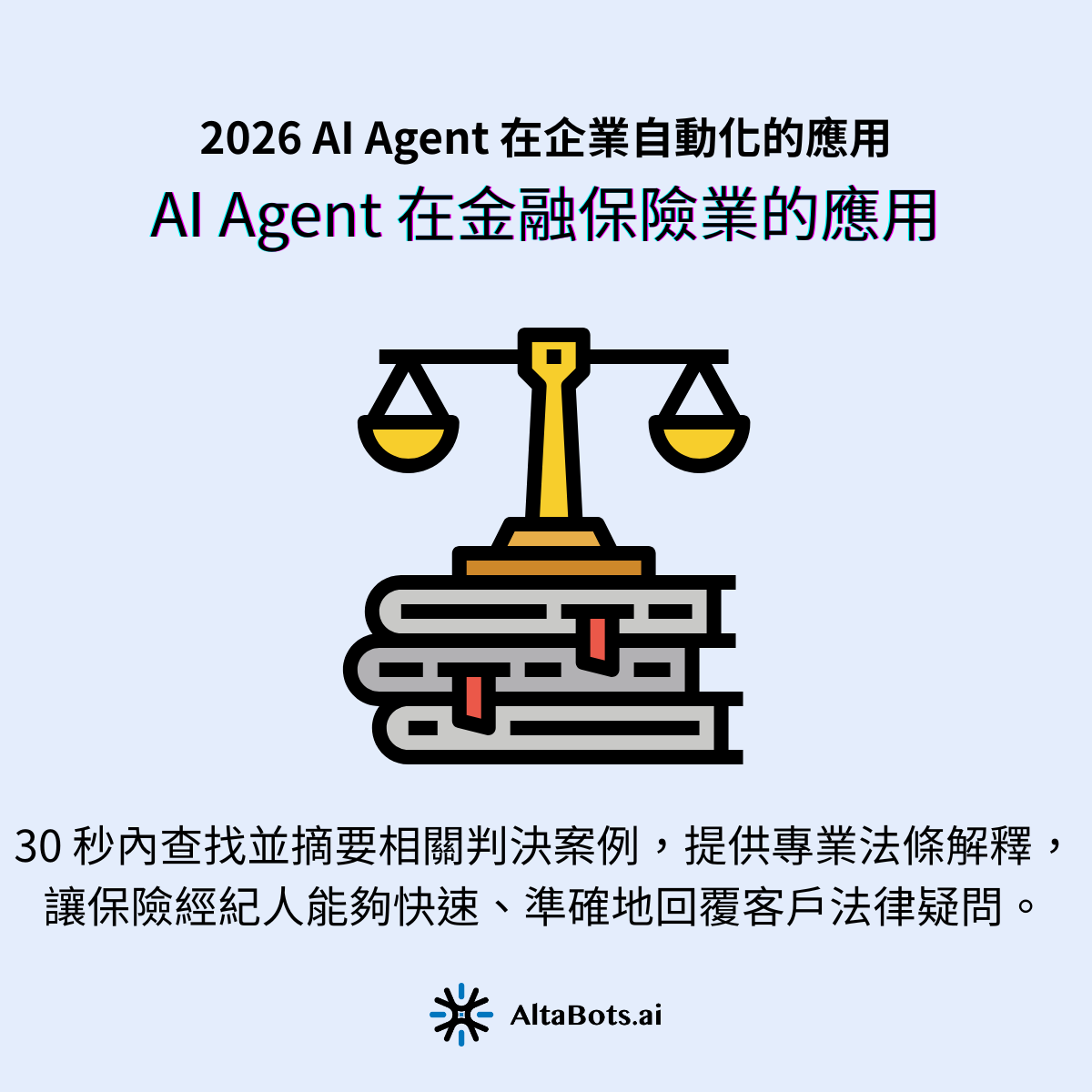
Finance and insurance: a lookup assistant for regulations and documents
Insurance or finance professionals can use an Agent to search approved regulations, rulings and internal policies and produce summaries with sources. Because the content affects customer rights, the system should not make the final judgment in place of professionals. Source dates, versions and human review must be kept.
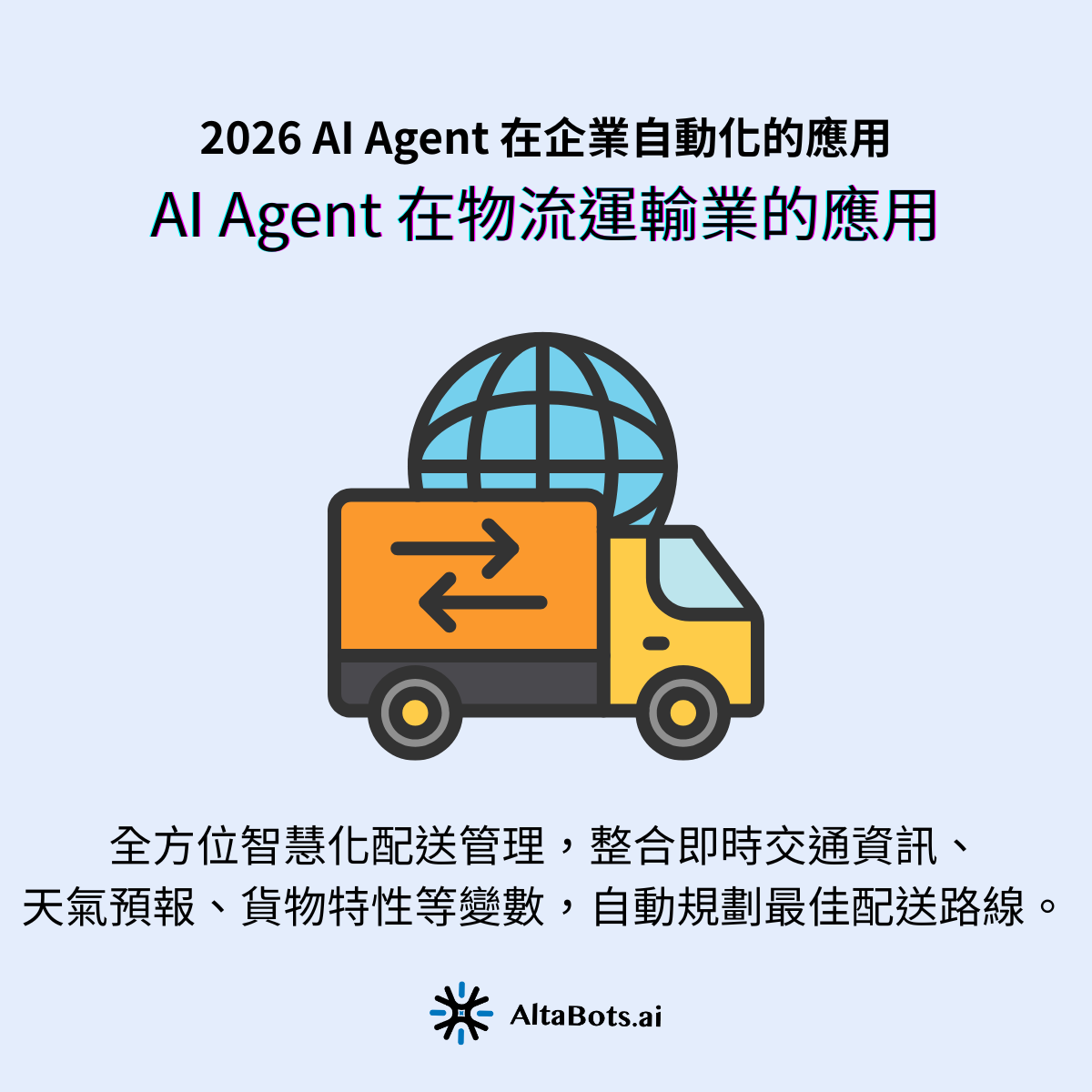
Logistics and transportation: compiling exceptions and dispatch suggestions
In logistics, an Agent can compile order status, weather, vehicles and customer service messages and flag exceptions that dispatchers need to handle. Calculating the best route or forecasting demand still requires suitable algorithms and live data, and cannot be done with a language model alone.
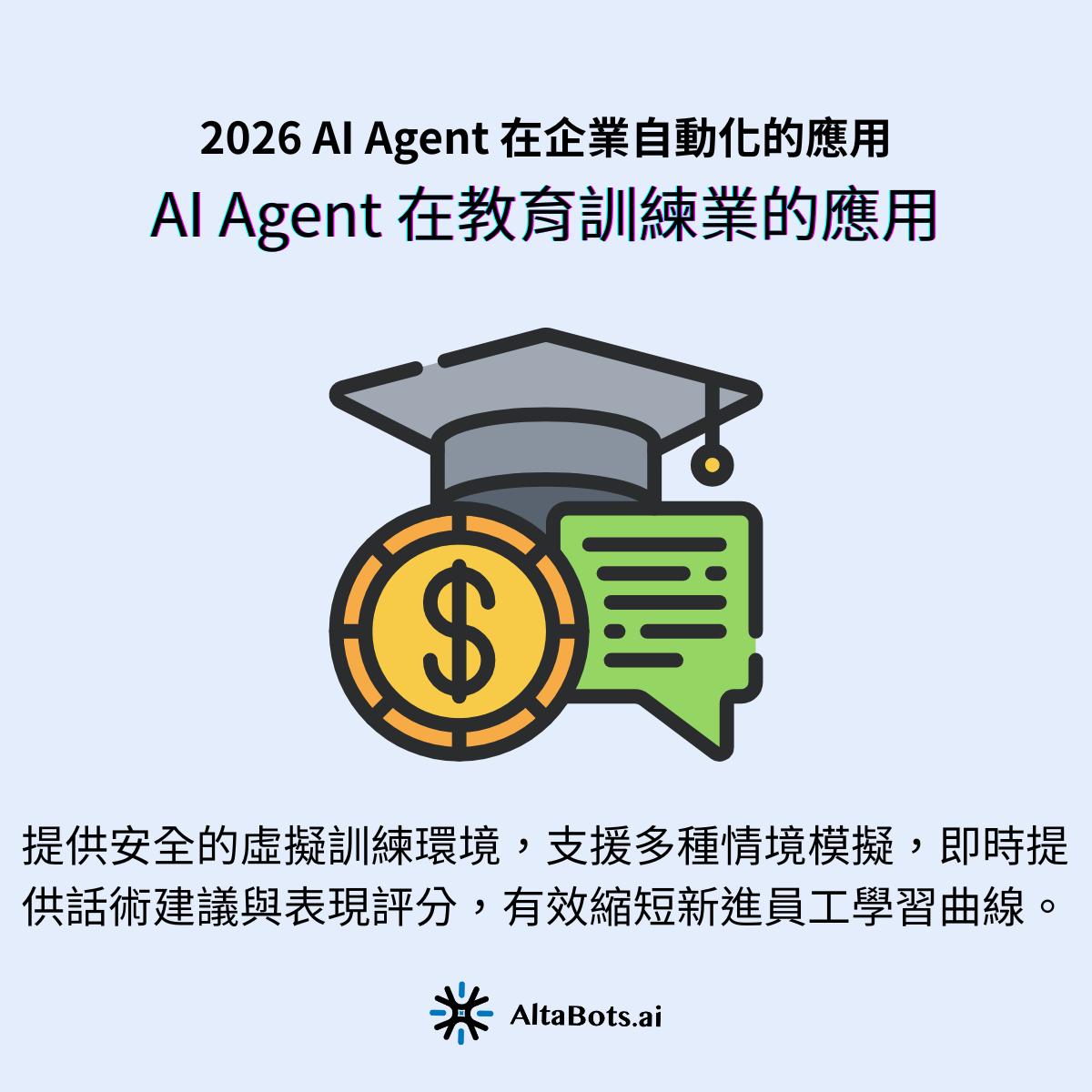
Training: material Q&A, scenario practice and feedback
Companies can have an Agent answer questions from approved training material, or play the practice counterpart in sales or customer service scenarios and then give feedback by clear rules. EcLife plans to use AI to build store training content, with the goal of shortening a three-month training period to one month. [8] The public information states a target, so it should not be described as a result already achieved.
Adopting AI Agents in the enterprise: start with one process you can verify
Stage 1: Validate a single process with a PoC
List three to five candidate processes first, then pick one that is highly repetitive, has available data and whose errors can be recovered. Before the PoC starts, record the current processing time, the number of manual edits and the error types, and set stop conditions. Also prepare a set of samples and sources already confirmed by people, so the same acceptance rules can be tested repeatedly.
If you need to turn requirements into a scope that can be accepted,30-day AI Agent POC guidecovers problem definition, sample preparation and acceptance steps.
Stage 2: Connect adjacent work and set human checkpoints
Once a single process passes, connect the input before it and the actions after it. For example, create tasks once the meeting summary is confirmed, or have the owner approve sending once the report is produced. Each time you add a tool, add permissions, exception handling and record checks at the same time.
Stage 3: Decide whether to expand using the same set of metrics
Companies should compare processing time, human intervention, errors and frequency of use before and after the PoC. If the Agent succeeds only in demonstrations and still needs a lot of rework in real use, fix the process or data first and do not rush to expand. If results are stable, apply the same governance rules to the next scenario.
How to estimate PoC budget and payback
The cost of an AI Agent cannot be judged by the monthly platform fee alone. The estimate should include needs review, data preparation, system integration, model and tool usage, human review, and maintenance time after launch. Different processes need different data and permissions, and no single amount applies to every company.
For payback, first compare current cost: monthly volume multiplied by manual time per item, plus the hours lost to error rework and waiting. After the PoC, calculate again on the same basis. If the time saved does not cover usage fees and maintenance hours, or the cost of errors rises, do not rush to expand.
Conclusion: use cases to choose a starting process
In 2026 the AI Agent market shows both adoption growth and project cancellation risk. For executives, the case with the biggest numbers is not necessarily the most useful. What counts is whether the original process, the data used, the division of work with people and the acceptance results are clear. If you are still comparing approaches in different departments, browse the AI Lab article sectionby adoption, technology and industry topics.
AltaBots.ai helps companies start from a process they can verify, orchestrating Agents with No Code, and consultants work alongside you to review needs, data, permissions and acceptance criteria. If you already have a highly repetitive process, prepare the current processing time, the data used and how people check the results, and thenbook an AltaBots.ai conversationto discuss whether a PoC fits.
References

[1] Gartner (2026.04). Hype Cycle for Agentic AI. Gartner.
https://www.gartner.com/en/articles/hype-cycle-for-agentic-ai
[2] Gartner (2025.08). Gartner Predicts 40% of EnterpriseApps Will Feature Task-Specific AI Agents by 2026, Up FromLess Than 5% in 2025. Gartner Newsroom.
https://www.gartner.com/en/newsroom/press-releases/2025-08-26-gartner-predicts-40-percent-of-enterprise-apps-will-feature-task-specific-ai-agents-by-2026-up-from-less-than-5-percent-in-2025
[3] Gartner (2025.06). Gartner Predicts Over 40% ofAgentic AI Projects Will Be Canceled by End of 2027. GartnerNewsroom.
https://www.gartner.com/en/newsroom/press-releases/2025-06-25-gartner-predicts-over-40-percent-of-agentic-ai-projects-will-be-canceled-by-end-of-2027
[4] McKinsey & Company (2026.08). The State of AI. McKinsey & Company.
https://www.mckinsey.com/capabilities/quantumblack/our-insights/the-state-of-ai
[5] McKinsey & Company (2026.03). State of AI Trust in2026: Shifting to the Agentic Era. McKinsey & Company.
https://www.mckinsey.com/capabilities/tech-and-ai/our-insights/tech-forward/state-of-ai-trust-in-2026-shifting-to-the-agentic-era
[6] Google Cloud (2026.03). Five insights to build youragentic AI advantage in 2026. Google Cloud.
https://cloud.google.com/transform/5-insights-to-build-your-agentic-ai-advantage-in-2026
[7] Small and Medium Enterprise and Startup Administration, Ministry of Economic Affairs (2026.01). Marketing with AI Agents? IMAG's new marketing technology model (in Chinese). Xinchuang Yuanmeng Wang (startup portal run by the agency).
https://startup.sme.gov.tw/startupselect/article/a967b7c6-7aef-46b7-aaab-cda86c2d8a4c
[8] Business Next (2026.06). The key to AI Agent adoption is not technology but the partner! How EcLife reshaped meeting and store training workflows with Data-DI (in Chinese). Business Next.https://www.bnext.com.tw/article/91282/data_di_2026
FAQ
FAQs about this article
How is an AI Agent different from a chatbot?

A chatbot mainly answers questions. An AI Agent can break work down, call tools and complete multiple steps within authorized limits, but companies still need to set human approval and stop conditions.
Which enterprise process is suitable for a first AI Agent PoC?
Choose a process that is highly repetitive, has available data, produces results that can be checked and has recoverable errors. Before starting, record processing time, manual edits and error types as the acceptance baseline.
Can AltaBots.ai predict customer purchase intent?
AltaBots.ai can infer user intent from conversation content, but it does not provide algorithmic sales or churn prediction. That need calls for a data analytics product, enough data and model training.
Does adopting an AI Agent require a large IT team?
Not necessarily. AltaBots.ai orchestrates processes with No Code, and consultants work alongside you to review needs and acceptance criteria. If legacy system integration, sensitive data or complex permissions are involved, the relevant owners still need to take part.
How do I decide whether an AI Agent project is worth continuing?
Compare processing time, human intervention, errors and actual frequency of use before and after the PoC. If results hold only in demonstrations, or daily use still needs a lot of rework, fix the process first or stop expanding.
More articles


訂閱我們的電子報
每月 8 日定期發送最新趨勢與實用資訊!



