

Choosing a marketing automation tool: 5 criteria, 2026 | Alta.DI
Five criteria for choosing a marketing automation (MA) tool in 2026, with practical examples from Alta.DI, AltaBots.ai and a CDP customer data platform, to help Taiwanese companies find an MA tool combination that fits their scenarios.


How do you choose a marketing automation (MA) tool? Whether you are evaluating your first MA system, or already use one and feel that "anyone can schedule emails, but the lead conversion rate won't move," the evaluation focus in 2026 is no longer the number of features. It is how many judgments AI can make for you and whether your data can be connected across channels.
A marketing manager responsible for three brands opens the back office on Monday morning and finds the weekend's unread messages scattered across LINE, email and Instagram. Sorting them by hand takes half a day. She does not lack tools. The data between her tools is not connected, so the same customer is treated as three different people on different channels. This is exactly the situation MA should solve.
What is MA marketing automation?
Understand what work MA saves you first, then talk about how to choose.
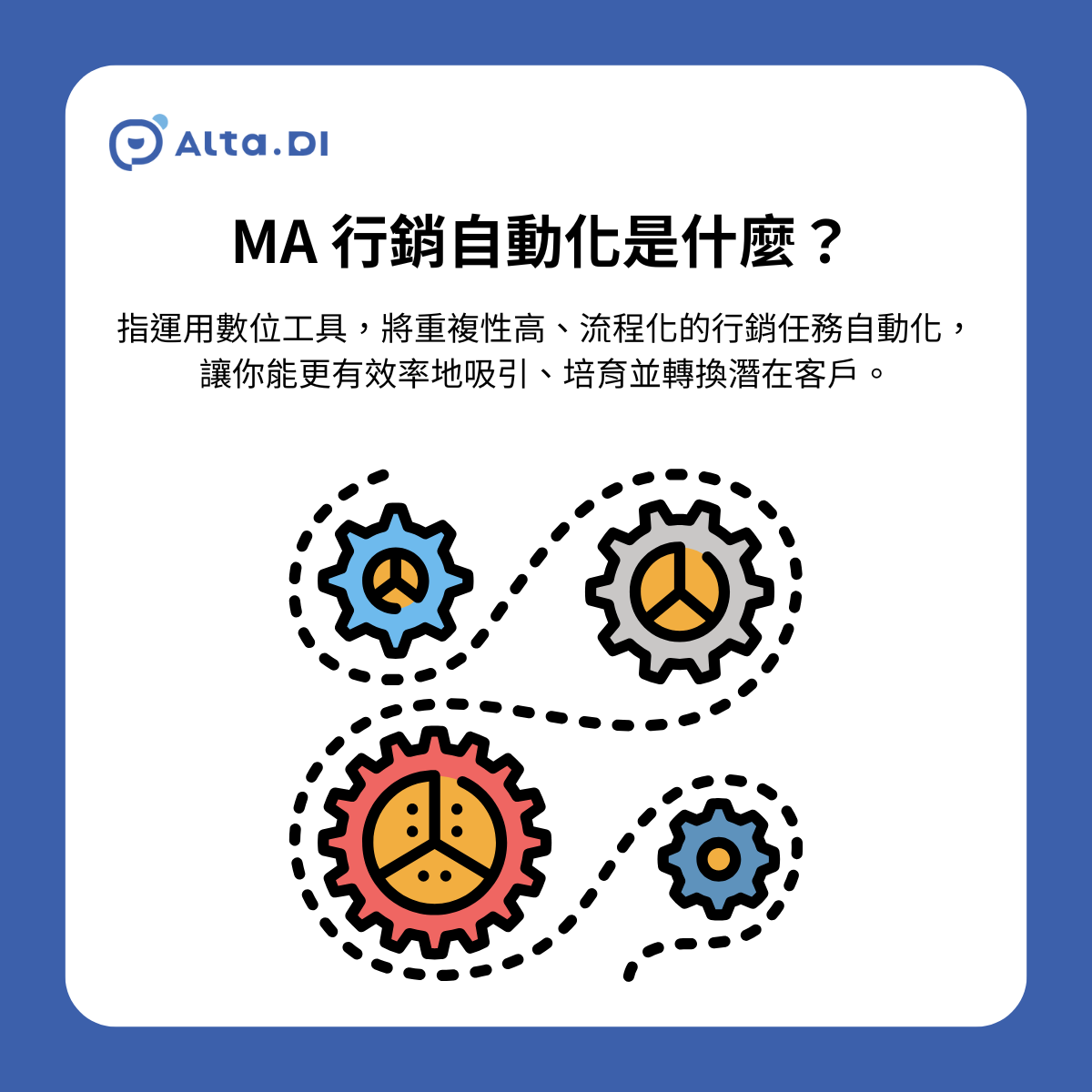
Marketing automation (MA) uses software to run repetitive marketing work automatically, including segmented emails, behavior-based triggers, lead scoring and cross-channel messaging, so that marketing teams can spend their time on strategy and content design. The core value of MA is not "doing less." It is making it possible to say the right thing to the right person at the right time at scale.
In 2026, plain scheduled automation is a baseline. Modern MA platforms are starting to build in AI segmentation, predictive analytics and conversational commerce, and can adjust communication strategy in real time based on user behavior. Small and mid-sized companies in Taiwan can now do precision marketing on a limited budget that used to be affordable only for large enterprises, and on most platforms the AI features are already built in and need no extra engineering resources.
Why re-evaluate your MA tools in 2026?
The traffic windfall is gone, and precise management is what wins now.
According to the latest report from Fortune Business Insights, the global marketing automation software market was about US$7.23 billion in 2025 and is projected to reach US$8.14 billion in 2026, with a compound annual growth rate of 12% from 2026 to 2034 [1]. Behind the market's continued growth, more companies are finding that sending emails and organizing lists by hand falls behind in more than efficiency. It lowers the precision of the whole customer acquisition model.
What MA can help you handle comes down to three things:
- Freeing up people: it handles repetitive work automatically so the team can focus on strategy and creative output.
- Reaching the right people: it segments users by behavior and sends personalized content instead of the same message to everyone.
- Shortening the sales cycle: automated nurturing gradually turns cold leads into warm opportunities, so customers have already done their homework when sales takes over.
How does the core MA marketing automation process run?
However expensive the tool, a wrongly designed process will not work.
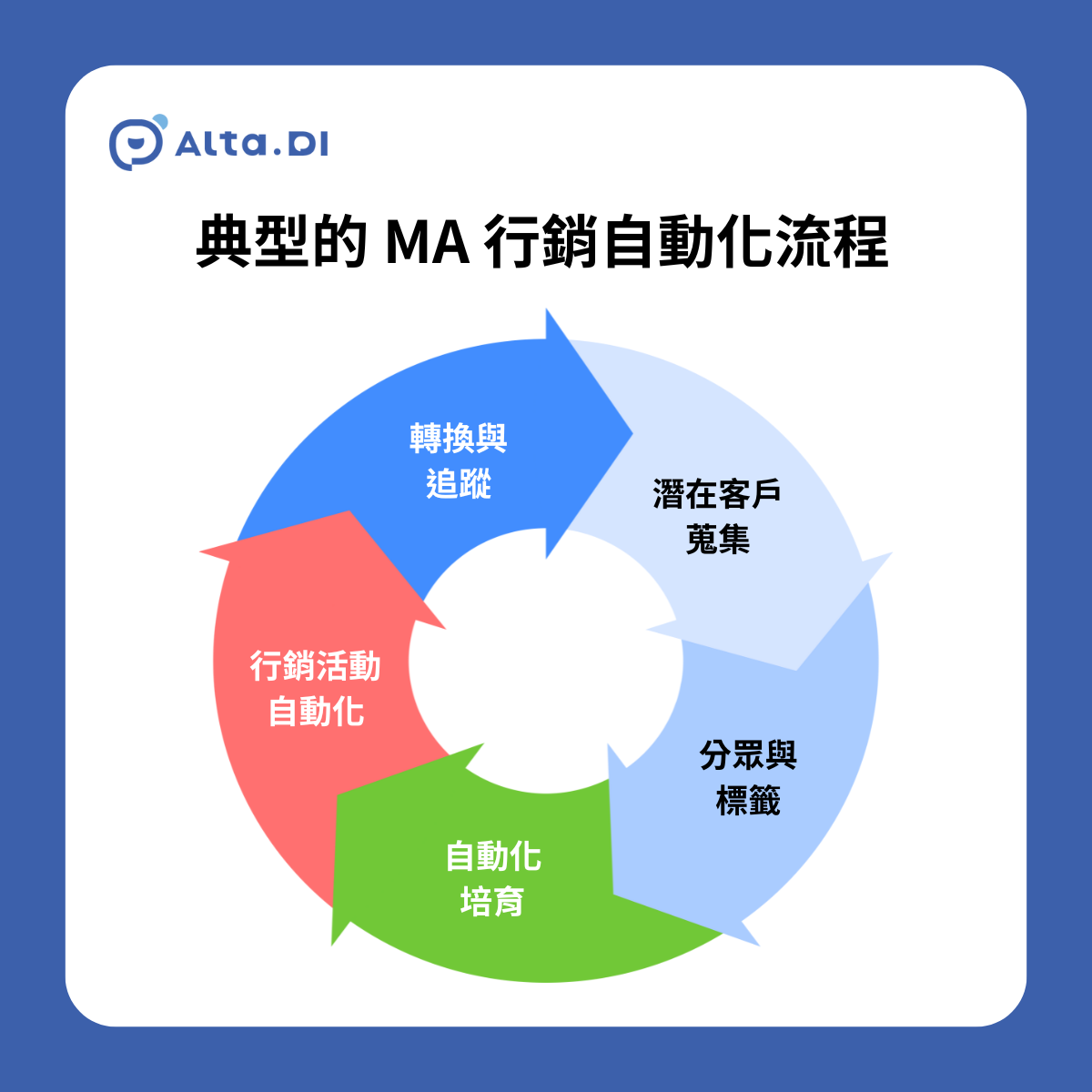
Whether MA succeeds depends not on how expensive the tool is but on whether the process is designed sensibly. Without a well-set process, even the most expensive tool is a car nobody drives. Here is a five-step standard process that suits most companies.
- Lead generation:Collect potential customers' contact details lawfully through website forms, whitepaper downloads and webinar registrations. The key is that the "exchange" for leaving details is valuable enough. An industry report, a free diagnostic or a practical tool will attract decision-makers better than a plain "subscribe to the newsletter."
- Segmentation & tagging:The system tags customers automatically based on behavior, for example having viewed the pricing page, clicked a certain product, or opened an email without clicking a link. Each action is a clue. The finer the tags, the higher the later conversion rate. For example, tag customers who viewed a product page more than twice in three days as "high intent," and the follow-up nurturing content can skip the basic introduction.
- Lead nurturing:Design a communication script. On Day 1, send a welcome email with the product catalog; on Day 3, the system checks whether the email was opened, sends a case study if it was, and resends with a different subject line if it was not. In MA this kind of script is called a Drip Campaign. It moves the relationship forward around the clock, and marketers do not have to watch the back office for open notifications. When designing scripts, we suggest testing first with your highest-value leads, then expanding to the whole audience once the process runs smoothly.
- Campaign automation: run campaigns on specific trigger conditions. For example, send a LINE reminder automatically 1 hour after a cart is abandoned, or send an exclusive offer code in the customer's birthday month. Abandoned cart recovery for cross-border e-commerce is especially suited to automation; see Shopify abandoned cart recovery: 5 automations for cross-border sellers.
- Conversion & tracking:The system scores leads automatically (lead scoring), and when a customer's score reaches a threshold, it notifies sales to follow up. It also tracks the open rate, click rate and final conversion of every email, and uses the data to adjust the next round of segmentation and content. This step is also the key handoff point between marketing and sales: what the system notifies is not "someone filled in a form" but "what this person has done, what the score is, and how to open the conversation."
Choosing an MA tool in 2026: look at these three AI capabilities first
Feature spec sheets do not show the difference. What really separates tools are the following three AI capabilities. When evaluating a tool, check them off one by one.
AI conversation and workflow automation: more than answering FAQs, it can run an entire service process
AI customer service has moved from "keyword matching" to understanding meaning and handling multi-step tasks. For cross-border e-commerce, AI can handle queries in Chinese, English and Japanese at once and reply to customers automatically across time zones. For Taiwanese domestic companies, complex processes such as returns and exchanges, warranty checks and order tracking can also be left to AI to run through according to the logic you set.
Alta.DI's AI customer service module supports channels such as LINE, Facebook, Instagram and WhatsApp feeding into one back office, with a three-layer handling path (Flow Bot for structured guidance, then AI Bot for open-ended Q&A, then human agents as the backstop), so AI handles most repeated questions and people focus on the cases that truly need judgment. AltaBots.ai, in turn, starts from internal company processes. It is an AI Agent platform suited to scenarios that need to connect internal systems and handle complex cross-department processes (customer service is only one application), with consultants working alongside you from decision to production. To learn more about how to select enterprise AI customer service, seehow to choose enterprise AI customer service: build in-house, platform or consultant-led.
Hyper-personalized recommendations: from "you may also like" to "what you need next"
AI can analyze a user's browsing trail and purchase history, predict "what this person is most likely to need next," and push the most relevant products or content automatically. This is more precise than traditional rule setting. Instead of "bought product A, so recommend product B," it combines browsing frequency, dwell time and cross-channel behavior to judge "which decision stage this person is in right now."
Doing this requires integrated customer data behind it. Alta.DI has CDP functions: it can consolidate customer data from the message channels it supports and from connected e-commerce platforms (Shopify, Shopline and others) to build tags, segments and 360-degree profiles, so that AI customer service can refer to the customer's interaction history and purchase behavior when it responds and recommends. If a company needs to connect more data sources for global identity resolution, the next section introduces a standalone CDP customer data platform.
Unified data platform: let marketing, sales and customer service see the same customer data
One common pain point for companies is the "data silo": marketing uses one system, sales uses another and customer service uses a third, so the same customer's data is scattered across three places and nobody sees the whole picture.
A CDP customer data platform exists to solve this. It performs end-to-end identity resolution across online behavior (website, app, LINE interactions), transaction data (CRM, orders) and external data (surveys, ads), so every department sees the same customer asset. Combined with MA's automated journey orchestration, marketers can set trigger conditions based on real-time behavior on a visual canvas, and can also run A/B tests. To sort out the data flow of cross-channel customer journeys, seethe 5-step guide to omnichannel integration (OMO).
How to choose an MA tool: five key criteria
Rather than being bombarded by feature lists, first grasp the five criteria that decide success or failure:
- Depth of AI integration:Whether it has AI segmentation, personalized recommendations and predictive analytics, and not just static scheduling.
- Unified platform capability:How well it integrates with systems such as CRM and CDP, so you avoid buying another data silo.
- Multi-channel marketing support:Whether email, SMS, LINE and social media can work together in one system.
- Localization and Chinese-language support:Chinese interface, local customer support, and accuracy of Chinese-language understanding.
- Flexible pricing and deployment:Whether there is a free trial, how friendly the entry threshold is, and whether you can scale up flexibly.
How the three products fit your scenarios
If you are a company in the Taiwan market, the three products below each address different needs and can be used alone or together:
Alta.DI | AI customer service × omnichannel customer management
It supports channels such as LINE, Facebook, Instagram and WhatsApp feeding into one back office, with built-in AI customer service (Flow Bot + AI Bot + human, three layers of handling), a CDP customer data foundation and a marketing automation module. It suits brands that need to handle customer service and customer management at the same time, and it is positioned as a channel-agnostic platform with all channels and all data. The Growth plan starts at NT$9,980 per month, and a free trial is available. For more details on features, see the Alta.DI platform introduction.
AltaBots.ai | Enterprise AI Agent platform
It suits companies that need AI to connect to internal systems and handle complex cross-department processes. Applications range from customer service, HR and finance to legal, and it supports RAG knowledge bases, Text2SQL and Multi-Agent collaboration. Unlike a typical MA tool, AltaBots.ai has consultants working alongside you from process design to production, so you get more than a tool: the process is made to run. It suits mid-sized and large companies with complex internal process needs. To learn more, visit the AltaBots.ai product page.
CDP customer data platform | Cross-channel data unification and precision marketing
The CDP layer built into Alta.DI can already handle data unification within its channels. If your company has more external data sources to integrate (ERP, POS, ad platforms, surveys and so on), the standalone CDP customer data platform offers more complete identity resolution and analysis. It unifies customer data scattered across systems, includes 12 analysis models (funnel, retention, LTV, attribution and more), and works with MA automated journey orchestration. It suits companies that already have multiple data sources but lack a unified view, especially in industries such as finance and retail that need precise segmentation and lifecycle management. For details, see the CDP customer data platform.
Your next step
To recap: the value of MA is making precise communication scale, not just scheduling emails. Process design (collect, segment, nurture, convert) determines how much the tool can do. The three AI capabilities that separate tools in 2026 are conversation automation, hyper-personalized recommendations and a unified data platform, and these three are what to confirm one by one when choosing. Alta.DI fits omnichannel customer service and customer management, AltaBots.ai fits complex internal processes, and the CDP customer data platform fits cross-system data integration. The three can be used independently or together.
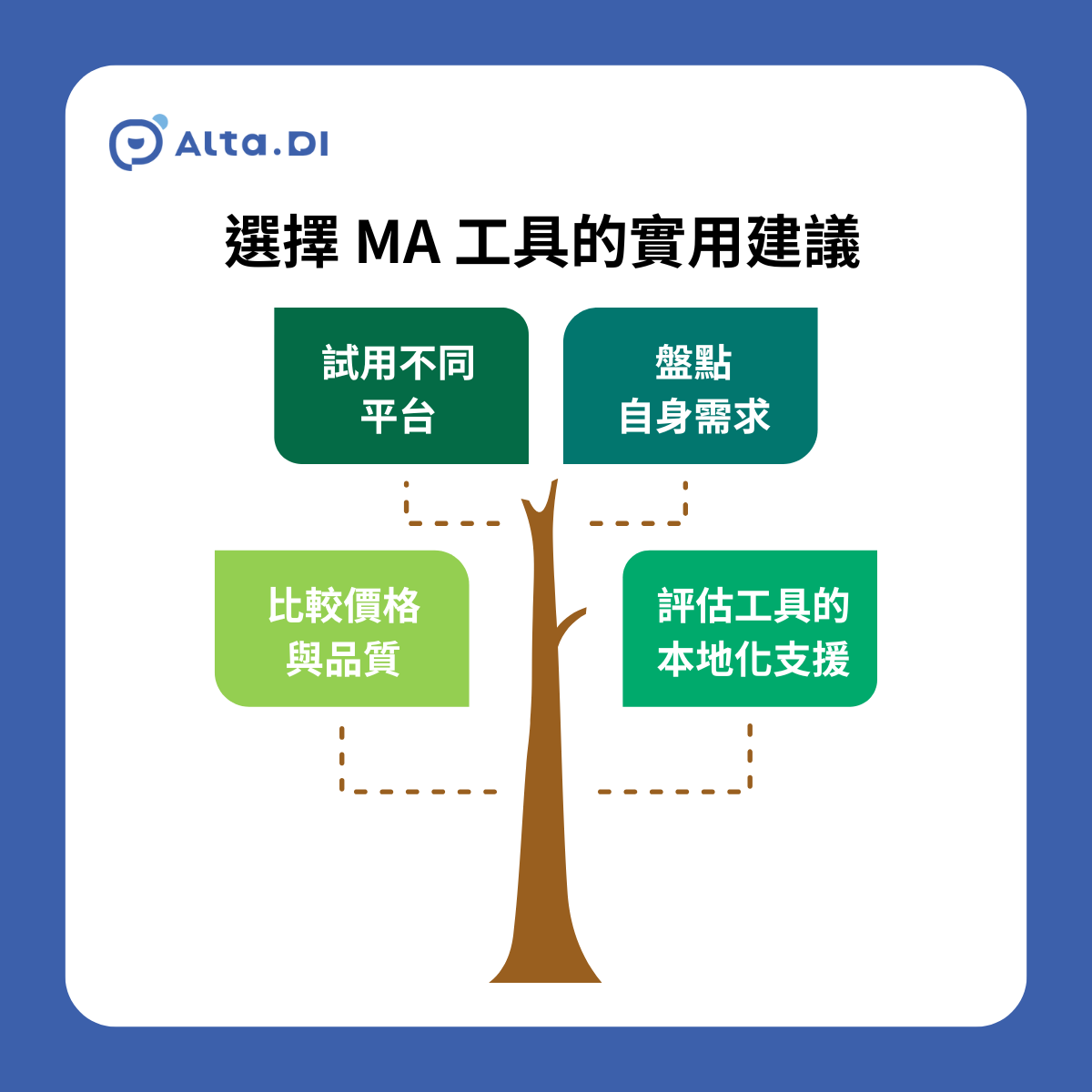
First list the three most time-consuming repetitive marketing tasks you have today, evaluate them against the five criteria above, and then decide which tool combination you need. The specific selection steps:
- Take stock of needs: among AI customer service, multi-channel integration, internal process automation and data unification, which is most pressing for you right now?
- Evaluate localization and Chinese-language support: Chinese interface, speed of local customer support response and accuracy of Chinese-language understanding. These three directly affect whether the team can get started smoothly.
- Try the automation workflow design and data analysis features: actually running one Drip Campaign or one segmentation rule is more accurate than reading a feature list.
- Compare pricing, deployment flexibility and quality of technical support: confirm the entry threshold, how the cost changes when you add users or channels, and how quickly you get a response when problems come up.
Every company gets stuck in a different place: some on multi-channel data integration, some on AI customer service's Chinese-language understanding, and some on not knowing which process to automate first. If you want to work out where to start,Data-DI offers a free 30-minute marketing automation diagnostic, in which a consultant reviews your current marketing processes and tool settings and gives specific recommendations for your scenario. You do not need to prepare any data in advance. Just tell us your website address and the tools you use now.
References

[1] Fortune Business Insights. (2026). Marketing Automation Software Market Size, Share & Industry Report 2026-2034. Fortune Business Insights.
https://www.fortunebusinessinsights.com/marketing-automation-software-market-108852
FAQ
FAQs about this article
Is marketing automation (MA) suitable for small and mid-sized companies in Taiwan?

Yes. MA can help a small team automatically handle repetitive work such as segmentation, sending emails and lead scoring, so limited staff can focus on strategy and content. The fewer people you have, the more noticeable the time saved by automation.
How much budget do marketing automation tools need?
It depends on the scope of features. Basic email automation starts at roughly a few hundred NT dollars per month, while platforms that include AI customer service and CDP integration, such as Alta.DI, have a Growth plan starting at NT$9,980 per month. We suggest trying it first and then choosing a plan.
How is an MA tool different from a CRM? Do I need to buy both?
A CRM manages customer relationships and sales progress, while MA manages marketing process automation. They work best when their data is shared, and some platforms already combine both functions, so confirm the degree of integration when choosing to avoid buying twice.
What is the difference between AltaBots.ai and Alta.DI?
Alta.DI focuses on omnichannel AI customer service and customer management. AltaBots.ai is an enterprise AI Agent platform suited to scenarios that need to connect internal systems and handle complex cross-department processes. They can be used independently or together.
What should I prepare before adopting an MA tool?
First take stock of three things: the repetitive marketing tasks that take the most time today, which systems your existing customer data is scattered across, and the handoff process between marketing and sales. With this information, your selection can target your actual needs.
More articles


訂閱我們的電子報
每月 8 日定期發送最新趨勢與實用資訊!



